 Home
Home


For further details, please contact us.
Contact Us
You’ve installed power capacitors to correct your facility’s power factor and reduce electricity bills. But a few months later, you notice swollen capacitor cases, unusual heat from your electrical panels, or even a blown capacitor. What went wrong?
The culprit is often harmonic distortion —and the missing piece is a detuned reactor.
This article explains how connecting a reactor in series with your power capacitor bank protects your equipment, improves overall power quality, and helps you avoid costly failures. By the end, you’ll understand the key selection criteria and be able to make an informed decision for your specific application.
The Hidden Threat: Why Capacitors Fail in Harmonic-Rich Environments
Power factor correction capacitors are designed to operate in a clean sinusoidal environment. But modern industrial and commercial facilities are filled with non-linear loads—variable frequency drives (VFDs), UPS systems, switching power supplies, LED lighting, and rectifiers. These loads draw current in non-sinusoidal pulses, injecting harmonic currents into your electrical system.
Here’s where the danger lies:
When you connect a capacitor bank to a system with harmonics, you create a parallel resonant circuit. The system’s inductive reactance (from transformers and cables) and the capacitor’s capacitive reactance can resonate at a specific harmonic frequency—typically the 5th or 7th harmonic. This resonance amplifies harmonic currents and voltages, often by 5 to 10 times or more.
The result? Your capacitors experience:
-
Overvoltage stress—terminal voltage can rise significantly above the rated value
-
Overcurrent heating—excessive harmonic currents cause additional I²R losses
-
Dielectric breakdown—repeated stress leads to capacitor bulging, leaking, or catastrophic rupture
A 2021 study published in IEEE Access documented that textile industry facilities with significant harmonic distortion required detuned reactor banks ranging from 5 kVAr to 20 kVAr per step to bring harmonic levels within IEEE 519-2014 and IEC 61000 standards. The study confirmed that capacitor-enabled detuned reactors have the potential for both harmonic suppression and power factor improvement.
For a deeper understanding of harmonic sources and their impact on your facility, explore YIDEK’s comprehensive guide on harmonic mitigation solutions.
How a Detuned Reactor Protects Your Capacitors
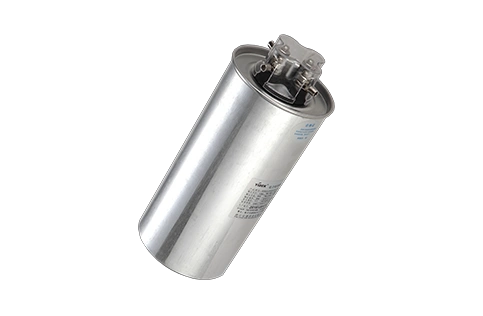
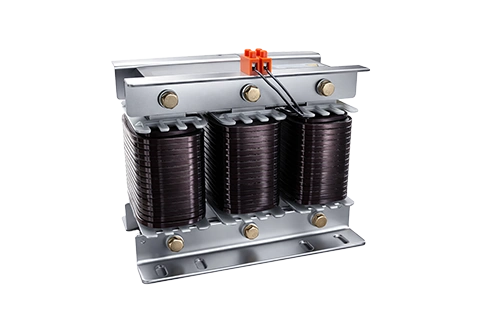
A detuned reactor (also called a series reactor or blocking reactor) is an iron-core inductor connected in series with your power capacitor. Together, the reactor and capacitor form a resonant circuit with a tuned frequency—deliberately set below the lowest harmonic frequency present in your system (typically the 3rd, 5th, or 7th harmonic).
Here’s what this achieves:
1. Shifts the Resonant Frequency Away from Harmonics
By adding the reactor’s inductive reactance, the combined LC circuit’s resonant frequency is detuned—shifted away from the harmonic frequencies that would otherwise cause amplification. This prevents the dangerous parallel resonance condition that destroys capacitors.
2. Suppresses Capacitor Switching Inrush Current
Every time a capacitor bank is switched on, a high-frequency, high-magnitude inrush current flows into the bank. Series reactors limit this inrush current to safe levels, protecting both the capacitor and the switching devices. Industry standards such as IEC 60871 specify that capacitors should withstand inrush currents up to 100 times nominal—but without a reactor, even this may not be enough.
3. Provides Harmonic Filtering
The reactor-capacitor combination acts as a passive harmonic filter, absorbing a portion of the harmonic current at the tuned frequency. While it doesn’t eliminate all harmonics (that’s the job of an active filter like APF), it prevents amplification and reduces the harmonic stress on your capacitors.
4. Protects Against Grid Surges and Feedback
Input reactors suppress grid surges and harmonic feedback from the grid, while output reactors reduce dv/dt (rate of voltage change), protecting motor insulation and extending transmission distances.
The practical benefit? Extended capacitor service life. YIDEK’s power capacitors, when paired with appropriately rated reactors, are validated for up to 180,000 hours of operation based on thermal aging models.
7% vs. 14% Reactors—Which One Do You Need?
The tuning percentage (or “p” value) of a detuned reactor determines its resonant frequency and which harmonics it primarily addresses. Choosing the wrong percentage can leave your capacitors vulnerable—or cause unnecessary overvoltage stress.
| Reactor Tuning | Primary Target | Resonant Frequency (50Hz system) | Capacitor Voltage Rise (400V system) | Best Application |
|---|---|---|---|---|
| 7% | 5th harmonic (250Hz) | ~189 Hz (3.78th order) | ~430V | General industrial environments with 5th harmonic dominance; THD < 15% |
| 14% | 3rd harmonic (150Hz) | ~134 Hz (2.67th order) | ~465V | Commercial buildings, data centers with many single-phase loads; 3rd harmonic dominance |
7% Reactors: The Universal Industrial Solution
7% reactors primarily suppress the 5th and higher-order harmonics (tuning frequency ~189Hz). They are the most common choice for general industrial environments where VFDs, motors, and transformers are the main harmonic sources.
When to choose 7%:
-
Your power quality analysis confirms 5th harmonic is dominant
-
Total harmonic distortion (THD) is below 15%
-
3rd harmonic content is low and requires no special attention
Capacitor requirement: Use capacitors rated at 440V or 450V in a 400V system, as the reactor causes a voltage rise to approximately 430V.
14% Reactors: For 3rd Harmonic-Rich Environments
14% reactors primarily suppress the 3rd and higher-order harmonics (tuning frequency ~134Hz). They are essential in facilities with a large number of single-phase loads—LED lighting, computers, servers, and office equipment—which generate significant 3rd harmonic currents.
When to choose 14%:
-
Your power quality analysis confirms 3rd harmonic is dominant
-
THD exceeds 15%
-
Measurements show very high 3rd harmonic background distortion
Capacitor requirement: Must use capacitors rated at 480V or 500V in a 400V system, as voltage rises to approximately 465V.
A critical note: Using a 14% reactor with standard 440V-rated capacitors will cause rapid capacitor failure due to overvoltage. Always match the reactor percentage with the appropriate capacitor voltage rating.
For a detailed walkthrough of the selection process, read YIDEK’s technical blog post: What a Detuned Reactor’s Rate Actually Does.
The Practical Impact—What This Means for Your Facility
Let’s look at two real-world scenarios:
Scenario A: A Metal Processing Plant
This facility operates multiple VFDs for rolling mills and conveyors. Power quality analysis reveals 5th harmonic distortion at 12% THD. The plant installs a capacitor bank with 7% detuned reactors. Result: Capacitor terminal voltage stabilizes at 430V (within the 440V capacitor rating), harmonic amplification is eliminated, and the bank operates reliably for years without bulging or failure.
Scenario B: A Large Office Building with LED Lighting and Data Center
Hundreds of LED drivers and server power supplies generate significant 3rd harmonic currents. The building’s power factor correction capacitors, installed without reactors, begin failing within months. After analysis, the facility switches to 14% reactors with 480V-rated capacitors. Result: 3rd harmonic currents are suppressed, capacitors operate within their voltage rating, and service life returns to normal.
Key takeaway: The cost of a detuned reactor is far less than the cost of repeated capacitor replacements, production downtime, and utility penalties for poor power factor.
Making the Right Choice—A Practical Decision Framework
Before specifying a detuned reactor for your capacitor bank, follow these steps:
Step 1: Conduct a Power Quality Survey
Use a power quality analyzer to measure harmonic distortion at your facility’s main distribution panel. Identify:
-
Which harmonic orders are dominant (3rd, 5th, 7th, etc.)
-
Total harmonic distortion (THD) levels
-
Individual harmonic current magnitudes
This is the lowest-cost, highest-return investment you can make before purchasing equipment.
Step 2: Determine Your Reactor Percentage
-
If 5th harmonic dominates → choose 7% reactor
-
If 3rd harmonic dominates → choose 14% reactor
-
If harmonics are mixed or uncertain → consider an 8.7% reactor as a compromise solution
Step 3: Match Capacitor Voltage Rating
-
For 7% reactors in 400V systems → use 440V or 450V capacitors
-
For 14% reactors in 400V systems → use 480V or 500V capacitors
Step 4: Verify Build Quality
Look for reactors with:
-
Low-loss CRGO or amorphous magnetic cores
-
Class F or H insulation with high thermal endurance
-
Vacuum impregnation for noise reduction and longevity
-
Built-in thermal protection
Step 5: Consider Your Long-Term Power Quality Strategy
If your facility has complex or variable harmonic sources, a detuned reactor may not be sufficient on its own. In such cases, consider combining passive filtering with active harmonic filters (APF) for comprehensive harmonic mitigation.
Next Steps—From Understanding to Selection
You now understand how a detuned reactor protects your power capacitors from harmonic damage, the difference between 7% and 14% tuning, and the practical steps to select the right reactor for your facility.
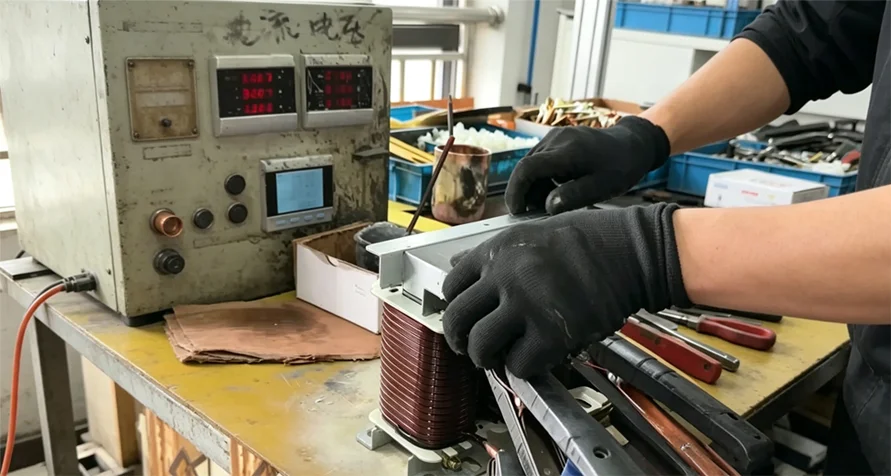
The next logical step is to evaluate specific product specifications for your application—considering factors like voltage rating, kVAR capacity, and physical installation requirements. YIDEK offers a complete range of detuned series reactors and self-healing power capacitors, with in-house winding and vacuum impregnation ensuring consistent inductance and long service life.Explore YIDEK’s power capacitor and reactor product line to find the right match for your system’s voltage and harmonic profile.
Related Reading
-
How to Choose the Right Detuning Reactor Percentage for Your Facility
-
The Role of Series Reactors in Capacitor Bank Protection – A Complete Breakdown
-
Understanding the Impact of Harmonic Order on Reactor and Capacitor Sizing