 Home
Home


For further details, please contact us.
Contact Us
If you manage an industrial facility, a commercial building, or any large-scale electrical installation, you have likely encountered the term “power capacitor.” But what exactly do these devices do, and why are they considered indispensable in modern electrical systems? The short answer is that power capacitors serve as the workhorses of electrical efficiency—they correct power factor, stabilize voltage, filter harmonics, and reduce energy losses. Understanding how they accomplish these tasks can help you make better-informed decisions about your facility’s power quality strategy.
This article breaks down the core functions of power capacitors, explains what each function means for your day-to-day operations, and provides a framework for evaluating your own system’s needs.
The Fundamental Role: Reactive Power Compensation
At its core, the primary purpose of installing capacitor banks in power systems is to supply reactive power to the system—a process known as VAR (volt-ampere reactive) compensation. But what does “reactive power” mean in practical terms?
In alternating current (AC) systems, electrical power has two components: active power (the energy that actually does useful work, like turning motors or lighting bulbs) and reactive power (the energy that oscillates between the source and the load, required to sustain magnetic fields in inductive equipment like motors and transformers).
Reactive power doesn’t perform useful work, but it consumes capacity on your electrical infrastructure—transformers, cables, and switchgear must all be sized to handle the total apparent power (a combination of active and reactive power). When reactive power is high, your system’s power factor drops below unity, meaning you are paying for electrical capacity that isn’t being used productively.
What this means for you: A low power factor can result in utility penalty charges, reduced system capacity, and increased energy losses. Power capacitors offset this reactive power demand by providing leading reactive power that cancels out the lagging reactive power drawn by inductive loads. The result? Your facility can deliver the same amount of useful work with less current draw, lower losses, and reduced electricity costs.
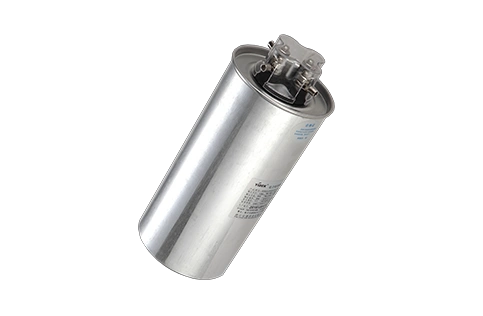
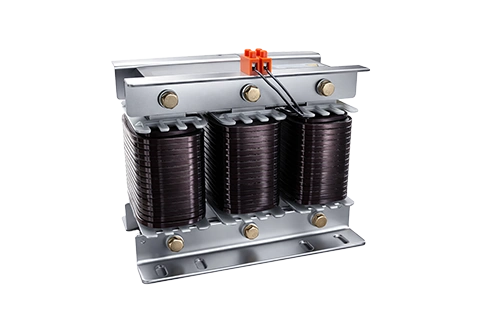
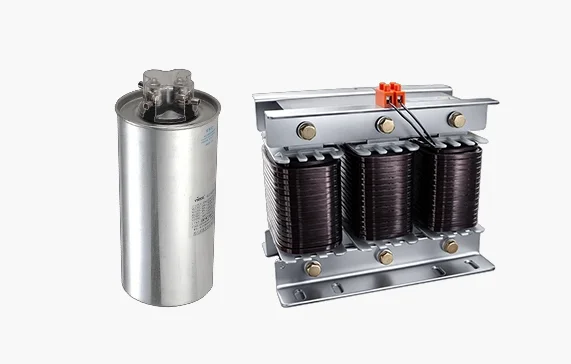
For a detailed look at component options, you can review the low-voltage power capacitors and detuned reactors series.
Industry context: The global capacitor bank market was valued at $4.3 billion in 2023 and is projected to reach $6.8 billion by 2033, growing at a CAGR of 4.8% from 2024 to 2033—a clear signal that industries worldwide are recognizing the value of reactive power compensation.
Power Factor Correction: Turning Efficiency into Savings
Power factor correction is perhaps the most widely recognized application of power capacitors. But the benefits extend far beyond simply avoiding utility penalties.
What power factor correction actually does: When you install shunt capacitors in your electrical system, they draw current that leads the source voltage, effectively canceling out the lagging current drawn by inductive loads like motors, transformers, and fluorescent lighting. The net result is a power factor that moves closer to unity (1.0)—the ideal state where all supplied power is doing useful work.
The tangible benefits you can expect:
| Benefit | What It Means in Practice |
| Reduced electricity bills | Lower demand charges and elimination of power factor penalty fees from utilities |
| Increased system capacity | Freed-up capacity in transformers, cables, and switchgear—potentially deferring costly upgrades |
| Reduced line and transformer losses | Less heat generated in cables and transformers means longer equipment life and lower cooling costs |
| Improved voltage profile | More stable voltages across your facility, reducing equipment stress and downtime |
| Release of power system capacity | Ability to add more loads without upgrading existing infrastructure |
Understanding these benefits is the first step. To explore how these principles are applied in a complete system, you can refer to our comprehensive power factor correction solution for your facility.
Harmonic Filtering: A Critical but Often Overlooked Function
Beyond power factor correction, power capacitors play an essential role in harmonic filtering—a function that has become increasingly important in modern electrical systems.
What are harmonics? Harmonics are voltage or current distortions caused by non-linear loads such as variable frequency drives, UPS systems, switching power supplies, and LED lighting. These distortions can overheat transformers, cause nuisance tripping of breakers, interfere with sensitive equipment, and reduce the overall lifespan of your electrical infrastructure.
How capacitors help: When configured as part of a passive harmonic filter—typically in combination with reactors (inductors)—capacitor banks can be tuned to absorb or divert specific harmonic frequencies. According to IEEE 1531-2020, the IEEE guide for the application of passive shunt harmonic filters applies to 50 Hz and 60 Hz power systems at low-voltage, medium-voltage, and high-voltage electric power systems. These filter systems are specifically designed to bring harmonic current distortion within acceptable limits.
The practical impact: Harmonic filtering protects your equipment from premature failure, reduces downtime, and ensures compliance with power quality standards like IEEE 519-2014. Under IEEE 519, harmonic voltage distortion on power systems 69 kV and below is limited to 5.0% total harmonic distortion (THD), with each individual harmonic limited to 3%. Exceeding these limits can harm power system equipment and its efficient operation.
A critical caution: Simply adding capacitors without considering harmonics can actually make the problem worse. Capacitors can create parallel resonance conditions with system inductance, amplifying certain harmonic currents. This is why harmonic analysis is essential before capacitor bank installation—and why many facilities opt for detuned capacitor banks or active harmonic filters when harmonics are present.
For a deeper dive into this topic, see our guide to the harmonic mitigation solution.
Voltage Support and Stability
Power capacitors also provide essential voltage support—a function that is particularly valuable for facilities at the end of long distribution lines or in areas with weak grid connections.
How voltage support works: By supplying reactive power locally, capacitors reduce the reactive current that must flow through transmission and distribution lines. This reduces voltage drops along the lines, resulting in higher and more stable voltages at the load end.
The practical benefits:
-
Prevention of voltage sags that can cause equipment shutdowns
-
Improved motor starting performance (motors draw significantly more current during startup, which can cause voltage dips)
-
Extended equipment life due to reduced thermal stress from voltage variations
-
Enhanced system stability that helps prevent load shedding and system collapse
According to research cited by OSTI (Office of Scientific and Technical Information), the benefits of adding shunt capacitors to a power system have long been recognized—including improved voltage profile, lower system losses, and better system power factor.
Key Considerations When Evaluating Power Capacitor Solutions
Before implementing power capacitors in your facility, consider the following decision factors:
1. Assess Your Load Profile
-
Is your load relatively constant or highly variable? Fixed capacitor banks may suffice for stable loads, but variable loads require automatic or stepped capacitor banks.
-
What is your current power factor? A power factor below 0.85 typically indicates a significant opportunity for improvement.
-
Do you have non-linear loads? If yes, harmonic analysis is essential before capacitor selection.
2. Evaluate Harmonic Conditions
-
Conduct a harmonic site survey to measure existing distortion levels.
-
Compare against IEEE 519-2014 limits to determine if passive filtering is required.
-
Consider detuned capacitor banks (capacitors in series with reactors) if harmonics are present—these are designed to avoid resonance conditions.
3. Determine Compensation Strategy
-
Centralized compensation at the main service entrance offers lower cost and easier installation.
-
Distributed compensation closer to individual loads can provide additional voltage support benefits.
-
Hybrid approaches combine fixed and automatic compensation for optimal performance under varying conditions.
4. Plan for Future Growth
-
Allow capacity for future load additions to avoid costly upgrades later.
-
Consider modular designs that allow incremental capacity expansion.
-
Factor in potential changes in utility tariffs or power quality requirements.
Real-World Application Scenarios
Industrial manufacturing facility with numerous large motors, variable frequency drives, and welding equipment. Key considerations include significant harmonic distortion from VFDs, variable load throughout production shifts, and sensitivity to voltage sags that can disrupt production lines. In this scenario, detuned capacitor banks with automatic step control—combined with harmonic analysis and potentially active filtering—would be essential.
Commercial building with HVAC systems, elevators, and lighting loads. Load is relatively predictable but varies by season and time of day. Power factor penalties from the utility are the primary concern. For this scenario, an automatic power factor correction system with stepped capacitor banks would typically provide the best return on investment.
Data center or critical facility where power quality and reliability are paramount. The load is relatively constant but highly sensitive to voltage disturbances. Harmonic content from UPS systems and switch-mode power supplies is significant. In this scenario, a combination of passive filtering and dynamic voltage regulation may be required, with redundant systems to ensure continuous operation.
Next Steps: From Understanding to Action
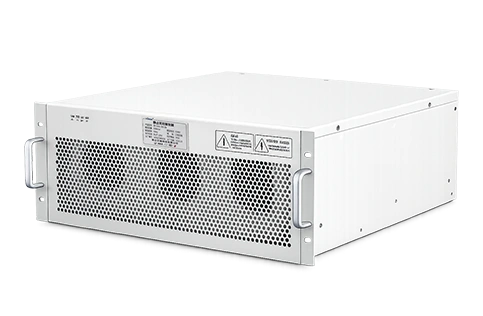
Once you have clarified these key decision factors—such as your load profile, harmonic conditions, and required compensation capacity—comparing the specific specifications of available solutions becomes the next logical step. You can review YIDEK’s power capacitor and reactor series for standard applications, or explore smart capacitor modules for automated compensation needs. For facilities with significant harmonic challenges, understanding the capabilities of active harmonic filters and static VAR generators will also be valuable.
Understanding why power capacitors are used is the first step. The next step is understanding which solution fits your specific application.
Related Reading
-
Understanding Power Factor: A Practical Guide for Facility Managers
-
Harmonics in Electrical Systems: Causes, Effects, and Mitigation Strategies
-
Fixed vs. Automatic Capacitor Banks: Which Approach Fits Your Load Profile?
-
Detuned Capacitor Banks vs. Active Harmonic Filters: A Decision Framework
-
Reactive Power Compensation in Industrial Facilities: Sizing and Placement Guide