 Home
Home


For further details, please contact us.
Contact Us
What is power quality?
In a general sense, power quality refers to a high-quality power supply, including voltage quality, current quality, power supply quality, and power consumption quality.
It can be defined as deviations in voltage, current, or frequency that cause electrical equipment to malfunction or not work properly. Its contents include frequency deviation, voltage deviation, voltage fluctuation and flicker, three-phase imbalance, temporary or transient overvoltage, waveform distortion (harmonics), voltage sag, interruption, swell, and power supply continuity, etc.
In modern power systems, voltage sags and interruptions have become the most critical power quality issues. Among them:
Voltage quality
This refers to the deviation between the actual voltage and the ideal voltage, reflecting whether the electrical energy supplied by the power company to the user is up to standard. This definition can cover most power quality issues, but it cannot cover power quality issues caused by frequency, nor can it cover the impact and pollution of the power grid's power quality by electrical equipment.
Current quality
This reflects the changes in current that are closely related to voltage quality. In addition to requiring a constant frequency and sinusoidal waveform for AC power, electricity users also require the current waveform to be in phase with the supply voltage to ensure high power factor operation. This definition helps improve power grid quality and reduce line losses, but it cannot encompass most power quality problems caused by voltage issues.
Power supply quality
Technically, this refers to voltage quality and power supply reliability; non-technically, it refers to service quality. This includes the power company's response speed to user complaints, as well as the reasonableness and transparency of electricity pricing.
Power quality
This includes current quality and reflects the rights, responsibilities, and obligations of the power user in the interaction and influence between the power supplier and the user. It also includes whether the power user pays the electricity bill on time and in full.
Key indicators for measuring power quality
Voltage deviation, frequency deviation, three-phase voltage imbalance, harmonics and interharmonics, voltage fluctuations, and voltage flicker.
Voltage deviation
Voltage deviation refers to the instability of the power supply voltage, with voltage rises or falls.
Frequency deviation
All power grids have the same frequency requirements, which will not change due to different power users. Each country has its own regulations regarding frequency deviation.
Three-phase voltage imbalance
The value of the three-phase voltage exceeds the specified standard.
Harmonics and Interharmonics
Currents or voltages whose frequencies are integer multiples of the fundamental frequency and exhibit sinusoidal behavior are called harmonics. Those that are not integer multiples of the fundamental frequency are collectively referred to as interharmonics.
Voltage fluctuations and flicker
Regular variations in voltage within the power grid are called voltage fluctuations, or random variations with a change range between 0.9 and 1.1. Flicker refers to the visual impact of voltage instability on light bulb illumination.
Small industries and main products involved in power quality
Reactive power compensation
According to voltage level, reactive power compensation is mainly divided into high-voltage reactive power compensation and low-voltage reactive power compensation.
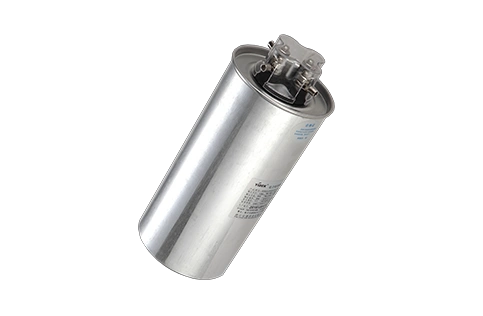
Based on different products and functions, the main reactive power compensation equipment includes: TSC, LC-type passive power filter, SVC, and STATCOM (SVG).
Harmonic mitigation
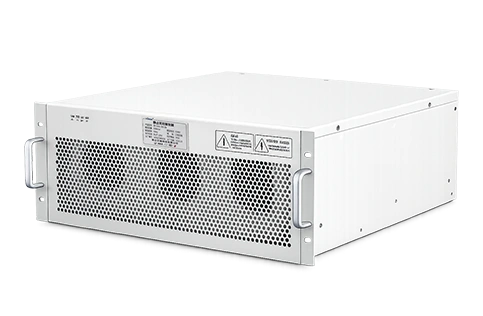
Active power filter (APF), passive power filter.
Power quality testing
Other power quality issues
What are the national standards for power quality?
1. Power supply voltage deviation (GB/T 12325—2008)
2. Voltage fluctuations and flicker (GB/T 12326—2008)
3. Harmonics in public power grids (GB/T 14549—1993)
4. Three-phase voltage imbalance (GB/T 15543—2008)
Characteristics of power quality
Power generation companies cannot fully control power quality. Some changes in power quality are caused by power users (such as harmonics, voltage fluctuations, and flicker) or by natural disasters and uncontrollable factors.
The electrical energy indicators supplied and used at different times are usually different, meaning that the quality of electrical energy is constantly changing in space and time.
Causes of power quality
Nonlinear problems exist in power system components
Nonlinearity issues in power supply systems include: harmonics generated during normal generator operation; harmonics generated by various transformers in the power grid; harmonics generated by DC transmission; and the amplification effect of high-voltage transmission lines on harmonics. Additionally, the installation of parallel capacitors in substations also contributes to harmonic generation. Among these factors, DC transmission is currently the primary contributor to harmonic generation in power systems.
Nonlinear load
Nonlinear loads account for a large proportion of industrial and residential electricity consumption and are a major source of harmonics in power systems. The primary nonlinear load is the electric arc furnace, whose arc ignition delay and severe arc nonlinearity generate harmonics.
In daily life and production, the fluorescent lamps used by residents have non-linear volt-ampere characteristics, which generate significant harmonic currents, with the third harmonic being the most prevalent. Furthermore, the use of high-power rectifiers and frequency converters also generates significant harmonic currents, seriously impacting the safety of the power grid.
Power system failure
Power quality is also affected by internal and external faults during the operation of the power system. For example, various natural disasters, abnormal human operations, various line short circuits, and changes in the working state of generators and excitation systems when the power grid fails can all have a significant impact on power quality.
The main hazards of power harmonics
1. It can cause series and parallel resonance, amplify harmonics, and create dangerous overvoltages or overcurrents;
2. It generates harmonic losses, reducing the efficiency of power generation, transformation, and power consumption equipment;
3. Accelerates the aging of electrical equipment insulation, making it more prone to breakdown and thus shortening its service life;
4. Causes equipment (such as motors, relay protection, automatic devices, measuring instruments, power electronic devices, computer systems, precision instruments, etc.) to malfunction or fail to operate correctly;
5. Interferes with communication systems, reduces signal transmission quality, disrupts the correct transmission of signals, and may even damage communication equipment.
Methods for controlling power harmonics
There are three main types of harmonic mitigation measures: first, active mitigation, which starts from the harmonic source itself and improves the electrical equipment to prevent or reduce the generation of harmonics; second, end-of-line mitigation, which starts from the equipment or system affected by harmonics and improves their ability; and third, passive mitigation, which involves installing power filters to prevent harmonics generated by the harmonic source from being injected into the power grid or to prevent harmonics from the power system from flowing into the load end.
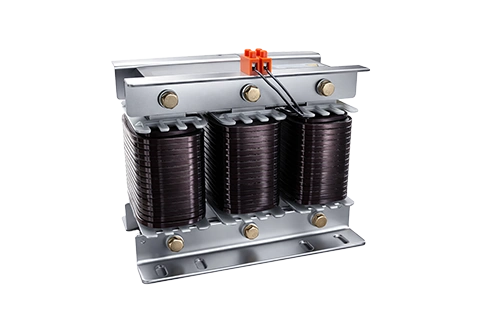
Due to the widespread and complex nature of harmonic sources, active mitigation methods are limited by factors such as equipment structure, efficiency, cost, and reliability, and can only solve some problems. Receiving-end mitigation and passive mitigation methods remain the main approaches to managing power harmonics. Examples include using series detuned reactors to suppress harmonic resonance amplification caused by reactive power compensation capacitors, and installing passive and active power filters in the system for filtering.