 Home
Home


For further details, please contact us.
Contact Us
Power
Power is the amount of work done or energy converted per unit of time.
1. Apparent power: Apparent power refers to the total power generated by a generator, which can be divided into active power and reactive power.
2. Active power: Active power is the electrical power required to keep electrical equipment running normally, that is, the electrical power that converts electrical energy into other forms of energy (mechanical energy, light energy, heat energy).
3. Reactive power: This is the electrical power used for the exchange of electric and magnetic fields within a circuit, and for establishing and maintaining magnetic fields in electrical equipment. It does not perform work externally, but is converted into other forms of energy. Any electrical equipment with electromagnetic coils consumes reactive power to establish a magnetic field. Reactive power does not perform work, but to ensure the conduction of active power, the reactive power of the power grid must first be satisfied.
Reasons for the need for reactive power compensation
Under normal circumstances, electrical equipment needs to obtain both active and reactive power from the power source. If the reactive power supply in the power grid is insufficient, the electrical equipment will not have enough reactive power to establish a normal electromagnetic field. As a result, the equipment cannot operate at its rated capacity, and the terminal voltage of the equipment will drop, thus affecting the normal operation of the equipment.
However, the reactive power supplied by generators and high-voltage transmission lines is far from meeting the load demand. Therefore, reactive power compensation devices need to be installed in the power grid to supplement reactive power and ensure that users' reactive power needs are met, so that electrical equipment can operate at rated voltage. Reactive power compensation involves connecting a device with a capacitive power load in parallel with an inductive power load in the same circuit. Energy is exchanged between the two types of loads, so that the reactive power required by the inductive load can be compensated by the reactive power output by the capacitive load.
General Methods of Reactive Power Compensation
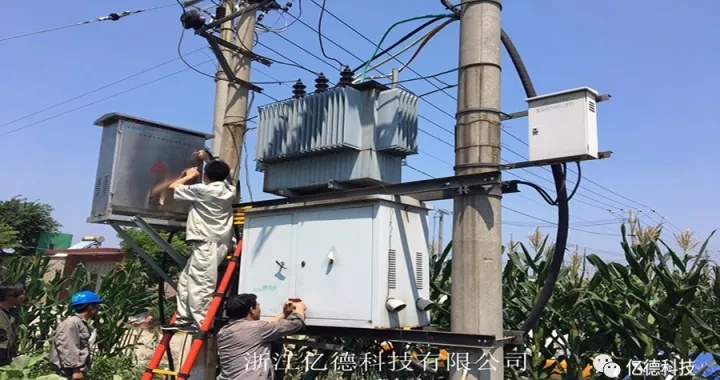
There are three main methods for reactive power compensation: low-voltage individual compensation, low-voltage centralized compensation, and high-voltage centralized compensation. The following is a brief introduction to the applicable scope and advantages and disadvantages of each method.
Low-voltage individual compensation
Low-voltage individual compensation involves distributing one or more low-voltage capacitor banks in parallel with individual electrical equipment based on their reactive power requirements. These capacitor banks share a circuit breaker with the equipment and are switched on and off simultaneously with the motor via control and protection devices. Random compensation is suitable for compensating for the reactive power consumption of individual large-capacity, continuously operating equipment (such as large and medium-sized asynchronous motors), primarily focusing on compensating for excitation reactive power. The advantages of low-voltage individual compensation are: reactive power compensation is activated when the equipment is running and deactivated when the equipment stops, thus preventing reactive power backflow. It offers advantages such as low investment, small footprint, easy installation, convenient and flexible configuration, simple maintenance, and low failure rate.
Low-voltage centralized compensation
Low-voltage centralized compensation refers to connecting low-voltage capacitors to the low-voltage busbar side of the distribution transformer via a low-voltage switch. A reactive power compensation switching device acts as the control and protection device, directly controlling the switching of capacitors based on the reactive power load on the low-voltage busbar. However, capacitor switching is performed as a whole, lacking smooth adjustment. The advantages of low-voltage compensation include simple wiring, low operation and maintenance workload, local reactive power balance, improved transformer utilization, reduced network losses, and high economic efficiency, making it one of the commonly used methods for reactive power compensation.
High-voltage centralized compensation
High-voltage centralized compensation refers to a compensation method in which parallel capacitor banks are directly installed on the 6-10kV high-voltage busbar of the substation. It is suitable for users who are far from the substation at the end of the power supply line and who have a high-voltage load. It can reduce the reactive power consumption of the power system and play a certain compensation role. The compensation device automatically switches on and off according to the load size, resulting in high compensation efficiency.
Classification of Reactive Power Compensation Devices
Reactive power compensation comes in many forms: classified by scope (load compensation and line compensation) and by nature (inductive and capacitive compensation). Below is a general overview of parallel capacitive compensation methods:
Synchronous camera adjustment
The basic principle of a synchronous condenser is no different from that of a synchronous generator; it only outputs reactive current. Because it does not generate electricity, it does not require a prime mover to drive it. Without a starter motor, a synchronous condenser has no shaft extension and is essentially equivalent to a synchronous generator idling in the power grid.
Synchronous condensers are the earliest reactive power compensation devices used in power grids. When the excitation current is increased, the output capacitive reactive current increases. When the excitation current is decreased, the output capacitive reactive current decreases. When the excitation field decreases to a certain extent, the output reactive current is zero, and only a small amount of active current is used to compensate for the losses of the synchronous condenser. When the excitation current is further reduced, the output inductive reactive current is generated.
Synchronous condensers have a large capacity, are not sensitive to harmonics, and have the characteristic of automatically increasing the output reactive current when the grid voltage drops. Therefore, synchronous condensers play an irreplaceable role in the reactive power safety of the power grid.
Due to their high price, low efficiency, and high operating costs, synchronous condensers have been gradually replaced by parallel capacitors. However, in recent years, due to concerns about the reactive power safety of the power grid, some people have advocated for the reintroduction of synchronous condensers.
Parallel capacitors
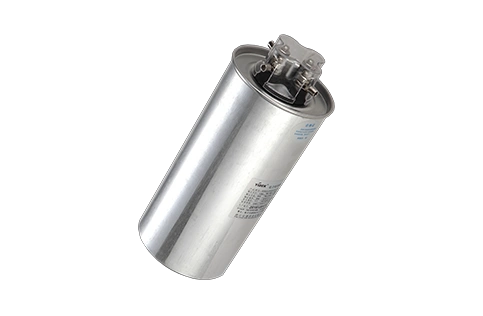
Parallel capacitors are currently the most common method for reactive power compensation. Their main advantages are low price, high efficiency, low operating costs, and high reliability when properly protected.
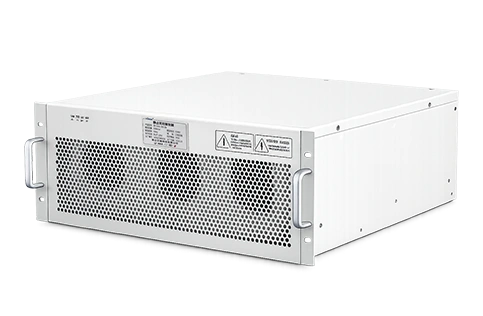
In high-voltage and medium-voltage systems, fixed-connection parallel capacitor banks are mainly used, while in low-voltage power distribution systems, automatic reactive power compensation devices with automatic capacitor switching control are mainly used. Automatic reactive power compensation devices come in various structures and are suitable for different load conditions. Low-voltage automatic reactive power compensation devices will be discussed in detail in a separate article.
The most significant drawback of parallel capacitors is their sensitivity to harmonics. When the power grid contains harmonics, the capacitor current increases dramatically, and it can also resonate with inductive components in the grid, amplifying the harmonics. Furthermore, parallel capacitors are constant impedance components, so their reactive power output decreases when the grid voltage drops, which is detrimental to the reactive power safety of the power grid.
Advantages of using reactive power compensation
1. Based on the power factor of electrical equipment, the energy loss of transmission lines can be calculated. Through on-site technical modifications, power factors that are below standard requirements can be brought up to meet the standards, thus achieving energy savings.
2. Adopting reactive power compensation technology to improve the power factor of low-voltage power grids and electrical equipment is an important measure for energy conservation.
3. Reactive power compensation: This involves using reactive power compensation equipment to increase the necessary reactive power, thereby improving the system's power factor, reducing energy consumption, improving grid voltage quality, and stabilizing equipment operation.
4. Reduce power loss. Generally, the power loss of factory power wiring is about 20%-30%, depending on the different lines and load conditions. After using capacitors to improve the power factor, the total power loss is reduced, which can reduce the power loss at both the supply and consumption ends.
5. Improve power supply quality, increase power factor, reduce total load current, and voltage drop. Adding capacitors to the secondary side of the transformer can improve the power factor and increase the secondary voltage.
6. Extending equipment lifespan and improving the power factor reduces the total current in the line, thereby reducing the load on transformers, switches, and other machinery and equipment, and the line capacity that is already close to saturation. This can reduce the temperature rise and increase the lifespan (the lifespan can be doubled for every 10 degrees Celsius decrease in temperature).
7. Ultimately, it meets the power system's monitoring requirements for reactive power compensation and eliminates penalties incurred due to excessively low power factor.
8. Reactive power compensation can improve power quality, reduce power loss, tap the potential of power generation and supply equipment, and reduce users' electricity expenses. It is an energy-saving measure with low investment and quick results.
9. The impact of reactive power compensation technology on the low-voltage distribution network of the power unit and the economic and social benefits brought about by improving the power factor, determine the reactive power compensation capacity, ensure that the compensation technology is economical, reasonable, safe and reliable, and achieve the goal of saving electricity.