 Home
Home


For further details, please contact us.
Contact Us
With the expansion of power distribution systems in advanced factories, numerous uninterruptible power supplies (UPS), high- and low-voltage frequency converters, and other equipment have emerged. While these devices enhance the automation and intelligence of my country's power distribution systems, their nonlinear characteristics introduce significant harmonic effects. In daily life, people primarily perceive harmonics as posing numerous hazards during power distribution. Therefore, the national power distribution network should conduct in-depth research into how factories address harmonic issues to comprehensively improve power quality and the safety of equipment operation within factory systems.
Harmonic generation mechanism in factory power distribution
The generation of harmonics in the power distribution system is mainly related to the large amount of nonlinear electrical loads within the system, primarily originating from components such as resistors, capacitors, and inductors, as well as high-frequency electronic power components. In factories, silicon rectifiers and frequency converters contain electric arcs, and the internal iron cores of transformers exhibit magnetic saturation and transient discharge characteristics, increasing the harmonic generation rate of the power distribution system. Therefore, under this operating condition, the current waveform of the equipment will inevitably be sinusoidal, and its harmonic frequencies will be integer multiples of the fundamental frequency. Harmonics not only threaten the power distribution quality of the factory but also increase the power loss rate of its transmission lines, leading to errors in the measurement of instruments used in the power distribution system, excessive heat generation in motors, and affecting the normal service life of the power distribution equipment.
Main hazards of harmonics in factory power distribution processes
Harmonics pose a serious threat to the safe and stable operation of factory power distribution systems, interfering with the installation, protection, and measurement of transmission lines. Electromagnetic relays and other components installed in power distribution equipment may malfunction or fail to operate due to harmonic interference, highlighting the severe threat they pose. Harmonic interference also shortens the lifespan of copper and iron components in transformers. Furthermore, harmonic noise affects the surrounding environment and interferes with workers' daily tasks. Harmonics also generate excessive heat for equipment, severely damaging it and accelerating its aging process. They affect the accuracy of electricity meters, leading to inconsistent measurement results. However, the most serious harm of harmonics is to human health, causing severe damage to the heart and brain by stimulating human cells.
Detailed Analysis of Harmonic Processing Methods
Based on the current power operation situation, the factory's power distribution system should address harmonic issues through multiple approaches, including controlling high- and low-harmonic sources, optimizing and improving the internal power distribution system, and installing harmonic suppression devices. From a principal perspective, harmonics can be categorized as active or passive. Active types utilize converters and distribution equipment that are designed not to generate harmonics, while passive types involve installing harmonic filtering devices within the existing power distribution system. Therefore, the comprehensive analysis of treatment methods includes the following two points:
Increase the system power within its power distribution system.
1. Applying the Natural Power Enhancement Method. The so-called natural power enhancement method primarily involves considering the use of reactive power at the source, thereby enhancing natural power, before the planning and construction of the power distribution system. Therefore, the factory's power distribution system requires rigorous on-site investigation during the planning and design process, along with corresponding distribution capacity analysis. It should also consider the expansion and renovation of the factory's power distribution system to avoid adverse effects caused by high power consumption and high-frequency operation of equipment, maximizing the achievement of automatic control power distribution performance targets.
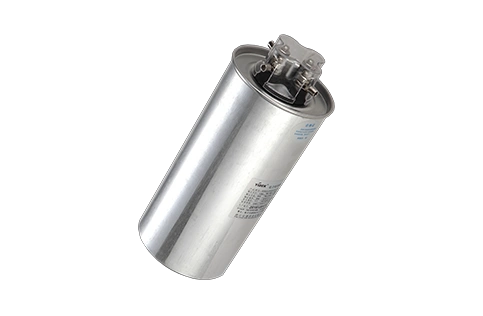
2. Install reactive power compensation devices. Although the natural power enhancement method significantly increases the power within the power distribution system at the source, the power distribution quality within the system still needs improvement. This necessitates the installation of reactive power compensation devices within the system. For concentrated load areas within the system, parallel capacitors are typically used theoretically to achieve rapid reactive power compensation, effectively reducing the reactive power generated during continuous energy exchange in these areas, while also stabilizing the internal voltage of the power distribution system. There are three specific harmonic compensation measures: individual compensation, for factories like steel mills or machinery plants that require high-power power distribution, which inevitably utilize high-power motors, generating significant reactive power. Therefore, individual compensation is necessary to achieve the planned system power increase, and installing single-unit reactive power and capacitor compensation devices is the best choice; group compensation, a common method used in many factories, to achieve safe power distribution. It primarily involves branching the lines and then grouping them for compensation. This method allows reactive power compensation equipment to be strategically installed at the front end of the line, improving the overall operating power of the line and further achieving high-efficiency compensation. Centralized compensation is more suitable for larger factory step-down substations, mainly for the centralized compensation of high and low voltage busbars. By adding dynamic reactive power compensation processing devices, the overall quality of factory power distribution is comprehensively improved.
Effective measures for harmonic suppression
1. Passive Suppression Techniques. This passive suppression technique employs three methods to achieve suppression:
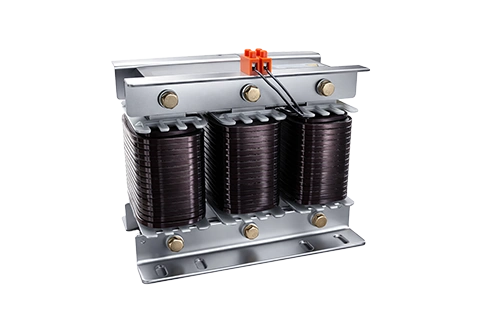
Adding a passive filter is the most common compensation method due to its low cost. It uses resistors (R), capacitors (C), and lamps (L) to form a parallel, low-resistance power path, and connects the capacitors (C) and lamps (L) in parallel to the input terminals of the corresponding rectifier components. The capacitor (C) component maintains the stability of the DC voltage, while the lamp (L) component reduces pulsed DC.
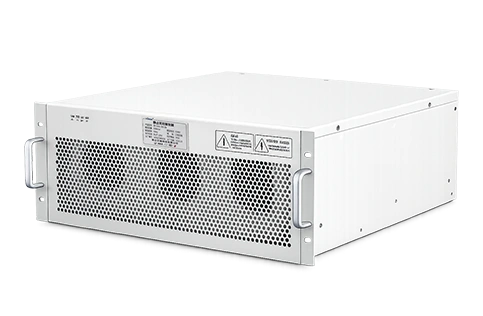
By adding an active filter near the resonant frequency, it is effectively transformed into a parallel power network with infinite admittance. The active filter structurally includes an AC inverter bridge, a DC inverter bridge, and a harmonic simultaneously connected to the circuit.
Meanwhile, the parallel connection of active power filters utilizes harmonics that generate opposite current loads to effectively suppress and eliminate harmonics. Therefore, it is well-suited for filtering harmonics from L-type loads. A rational analysis of today's power market shows that this technology has matured, especially in factory power distribution. However, due to the high capacity of the active filter itself, its selection involves higher costs. Series active power filters, on the other hand, passively suppress harmonics by using harmonics that generate opposite voltage loads. Therefore, this type of device is mainly used in rectifier circuits with C-type diodes, which also limits its application.
By adding some hybrid filters, there are multiple feasible combinations. The main combinations are: (1) parallel APF and PF; (2) series APF and parallel PF; (3) dual series connection of APF and PF to the system; (4) a combination of series and parallel connection of APF. Based on the flexibility, good control plasticity, and responsiveness of APF in filtering, it effectively avoids relative interference from the system's internal impedance. Therefore, the various hybrid methods of the filter have strong application and dynamic compensation capabilities, but their high configuration cost and significant system losses relatively restrict the large-scale application of the filter in the power distribution system. Subsequently, with the technological leap of semiconductors and the expansion of IGBT applications, the application and development of this filter have flourished, providing favorable conditions for its development prospects.
2. Active Suppression Technology. Compared with passive suppression, this active suppression technology utilizes more high-power electrical and electronic components, including multi-pulse rectification, multi-level converter technology, and pulse width modulation technology. Multi-pulse rectification mainly uses 12 and 24 pulses to reduce harmonic current; multi-level converter technology superimposes square wave voltage and current waveforms, thereby making the internal voltage and current close to sinusoidal values to achieve the purpose of adjusting to an ideal waveform; pulse width modulation technology relies on Fourier series theory to achieve the conversion between harmonics and fundamental frequency by controlling the transformation time of the output waveform.
The practical significance of addressing the harmonics generated in factory power distribution
Due to the severity of harmonic hazards, harmonic management has become a key aspect of ensuring safety in factory power distribution. When a power distribution system generates nonlinear loads, the limited fundamental energy provided by the equipment and loads during the transmission, transformation, and absorption of electrical power is partially converted into harmonic energy, thus transmitting a significant amount of harmonics into the system. The presence of harmonics reduces the efficiency of electrical energy transmission, causing equipment to overheat, vibrate, and generate noise, leading to aging of insulation components, shortening service life, and potentially causing power distribution accidents. Therefore, to achieve the factory's goal of safe power distribution and ensure stable system operation, targeted and reasonable harmonic management is crucial to minimizing harmonic hazards and keeping them within a limited range, thereby providing a high-quality operating environment for the factory's power distribution system. This management is currently a primary task in power plant power distribution, and its implementation has significant implications for the power industry.
Conclusion
My country's current electricity consumption trend is steadily developing towards higher efficiency and higher quality, thus increasing the importance attached to harmonic management in power distribution. By understanding the numerous harms and sources of harmonics to humans and power distribution systems, effective treatment methods have been proposed. New electronic components are being used in harmonic suppression devices in power distribution systems to enhance the system's internal nonlinearity and complexity. Through proactive implementation of harmonic management, the efficiency of the power distribution system utilization has been greatly improved. Only by continuously improving the quality of power distribution in factories can the power industry provide better power distribution services to society.