 Home
Home


For further details, please contact us.
Contact Us

Reactive power is the electrical power required to generate and transfer energy in electrical systems. Many electrical devices operate based on the principle of electromagnetic induction, such as distribution transformers and electric motors. The electrical power needed to create this alternating magnetic field and induce magnetic flux is called reactive power. Therefore, "reactive" power is not "useless" power; it simply means that its power is not converted into mechanical or thermal energy. Thus, in power supply systems, both active and reactive power are necessary; neither can be dispensed with. The unit of reactive power is var (Var).
Power
Power: refers to the electrical energy produced by a generator per unit time, flowing through a circuit. When current passes through a circuit, it can be converted into mechanical energy or heat.
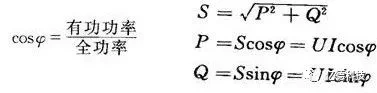
1. Active power: also called average power. The instantaneous power of alternating current is not a constant value. The average value of power over one cycle is called active power. It refers to the power consumed by the resistive part in the circuit. For a motor, it refers to its output power. It is represented by the letter P, and the unit is kilowatt (kW).
2. Reactive Power: In a circuit with inductance (or capacitance), the inductor (or capacitor) stores the energy of the power source as magnetic field (or electric field) energy during half a cycle, and then returns the stored magnetic field (or electric field) energy to the power source during the other half cycle. They merely exchange energy with the power source and do not actually consume energy. The amplitude of this energy exchange is called reactive power, denoted by the letter Q, and measured in kilovars (kVar).
3. Apparent power: In a circuit with resistance and reactance, the product of voltage and current is called apparent power, represented by the letter S, and the unit is kilovolt-ampere (kVA).
The relationship between active power, reactive power, and apparent power can be represented by a power triangle:
Reactive power is by no means useless power; it has significant applications. Electric motors need to establish and maintain a rotating magnetic field to make the rotor rotate, thereby driving mechanical motion. The rotor magnetic field of an electric motor is established by drawing reactive power from the power source. Transformers also require reactive power to generate a magnetic field in their primary coil, inducing voltage in the secondary coil. Therefore, without reactive power, an electric motor will not rotate, a transformer cannot transform voltage, and an AC contactor will not engage.
Under normal circumstances, electrical equipment needs to obtain both active and reactive power from the power source. If the reactive power supply in the power grid is insufficient, the electrical equipment will not have enough reactive power to establish a normal electromagnetic field. Consequently, the equipment cannot operate at its rated capacity, and the terminal voltage of the equipment will drop, thus affecting its normal operation.
Reactive power also has certain adverse effects on power supply and consumption, mainly in the following ways:
(1) Reduce the output of the generator's active power.
(2) When the apparent power is constant, increasing the reactive power will reduce the power supply capacity of the transmission and transformation equipment.
(3) The flow of reactive power in the power grid will cause an increase in line voltage loss and power loss.
(4) When the system lacks reactive power, it will cause low power factor operation and voltage drop, which will prevent the electrical equipment capacity from being fully utilized.
Reactive Power Load Conditions
Among various electrical devices, apart from the relatively small incandescent lamp lighting load, which only consumes active power and a small number of synchronous motors that can generate some reactive power, most consume reactive power.
Therefore, both industrial and agricultural users operate with a lagging power factor cos φ, which is approximately 0.6-0.9. Larger values correspond to applications using high-capacity synchronous motors.
Reactive Power Balance
Reactive power losses in transformers and power lines account for a significant proportion of the system's output. Reactive power in the system needs to be balanced; that is, both the reactive power consumed by the load and the reactive power losses must be compensated by reactive power sources. A certain amount of reactive power reserve should be maintained in the system; otherwise, voltage quality cannot be guaranteed when the load increases.
It should be emphasized that the prerequisite for reactive power balancing is that the system voltage level is normal. If reactive power balancing cannot be guaranteed under normal voltage levels, the voltage quality of the system cannot be guaranteed.