 Home
Home


For further details, please contact us.
Contact Us
Exploring the significance of reactive power compensation for factory power supply systems
With the vigorous promotion of energy conservation and emission reduction by the state, industrial plants have all developed their own waste heat power generation and power distribution systems. The parallel operation of the plant's power distribution system with the external power grid improves the safety and reliability of the plant's power distribution system. At the same time, various inductive loads consume a large amount of reactive power from the system, making reactive power compensation and power factor regulation of great significance.
Introduction to Reactive Power and Power Factor
1. Reactive power is the electrical power that establishes and maintains the magnetic field in electrical equipment through the exchange of electric and magnetic fields in a circuit. It does not do external work, but converts electrical energy into other forms of energy. Any electrical equipment with an electromagnetic coil needs to consume reactive power to establish a magnetic field. The rotor magnetic field of an electric motor is established by obtaining reactive power from the power source. Transformers also need reactive power to generate a magnetic field in the primary coil and induce a voltage in the secondary coil. Therefore, without reactive power, the electric motor will not rotate, the transformer cannot transform the voltage, and the AC contactor will not engage. Under normal circumstances, electrical equipment needs to absorb not only active power from the power source, but also reactive power. If the reactive power in the power grid is insufficient, the electrical equipment will not have enough reactive power to establish a normal electromagnetic field. Then, this electrical equipment cannot maintain operation under rated conditions, and the terminal voltage of the electrical equipment will drop, thus affecting the normal operation of the electrical equipment. Capacitive reactive power can compensate for the inductive reactive power lost due to reactive power exchange, thus achieving effective reactive power balance. The reactive power supplied by generators and high-voltage transmission lines is far from meeting the load demand. Therefore, some reactive power compensation devices need to be installed in the power grid to supplement the reactive power and ensure that users can meet their reactive power needs. This is the reason why the power grid needs to install reactive power compensation devices.
(2) Electrical loads in the power grid, such as motors and transformers, are inductive loads. There is a phase difference between the phasors of voltage and current in an inductive load, which is usually represented by the cosine of the phase angle. This is called the power factor. The power factor is an important indicator reflecting the rational use of electrical equipment by power users, the degree of power utilization, and the level of power management. The power factor is divided into natural power factor, instantaneous power factor, and weighted average power factor. The natural power factor refers to the power factor of electrical equipment without reactive power compensation equipment, or the power factor inherent in the electrical equipment itself. The level of the natural power factor mainly depends on the load characteristics of the electrical equipment. Resistive loads (incandescent lamps, resistance furnaces) have a higher power factor, equal to 1, while inductive loads (motors, welding machines) have a lower power factor, both less than 1. The instantaneous power factor refers to the power factor read from the power factor meter at a certain instant. The instantaneous power factor changes constantly with the type of electrical equipment, the size of the load, and the voltage level. The weighted average power factor is the average power factor over a certain period of time.
Methods of Reactive Power Compensation
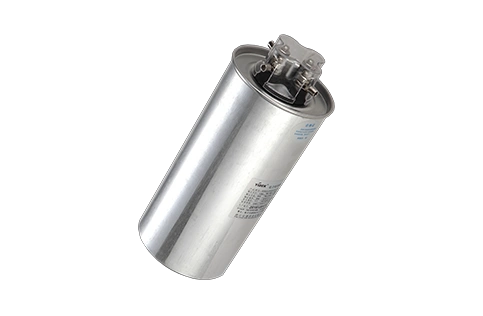
In power systems, there are many methods for compensating reactive power, including using synchronous generators, synchronous motors, synchronous condensers, parallel capacitor banks, and SVCs. In many power supply systems, due to the predominance of inductive loads and the total equivalent load being inductive, parallel capacitor banks are typically used to compensate for reactive power and improve the power factor. When power is supplied by a standby generator set, an automatic excitation voltage regulator is installed to automatically regulate reactive power and voltage.
Depending on the installation location, there are three compensation methods for parallel capacitors: First, centralized compensation involves installing capacitor banks on the busbar to improve the power factor of the entire substation and reduce reactive power losses in the feeder lines. Second, capacitor banks are installed separately on the busbars in areas with lower power factors for zoned compensation, which has a better compensation effect, but the compensation range is smaller than that of centralized compensation. Third, capacitor banks are installed near the load equipment for local reactive power compensation. This method is suitable for inductive equipment such as asynchronous motors and lighting circuits, mainly fluorescent lamps. The advantage of this method is that it can improve the power factor of the power supply circuit and improve the voltage quality of the electrical equipment itself. The disadvantage is that the capacitors are distributed, resulting in a large amount of maintenance work. With the improvement of domestic self-healing capacitor technology and production level, conditions have been created for the promotion of local compensation methods.
Calculation of Power Factor Improvement
Connecting a capacitor in parallel with an inductive load improves the power factor. In an inductive load circuit, the current lags behind the voltage. Connecting a capacitor in parallel creates a capacitor branch current that leads the voltage by 90°, offsetting the lagging current and reducing the total current in the circuit. This reduces the impedance angle and improves the power factor. While series capacitors can also improve the power factor, they reduce the total impedance and increase the total current, thus increasing the burden on the power supply. Therefore, series capacitors are not used to improve the power factor.
Given that the load's terminal voltage is U, the voltage frequency is f, the power supplied to the load is P, and the power factor is, to increase the load's power factor from to, what size capacitor needs to be connected in parallel across the load?
Summary
In practice, factory power supply and distribution systems consume a large amount of reactive power. Reactive power compensation and improving the power factor can save costs and improve economic efficiency for the factory itself, and also provide reliable protection for the safe operation of the external power system.