
 Home
Home


For further details, please contact us.
Contact Us
Project: PV Grid Integration Reactive Power Compensation
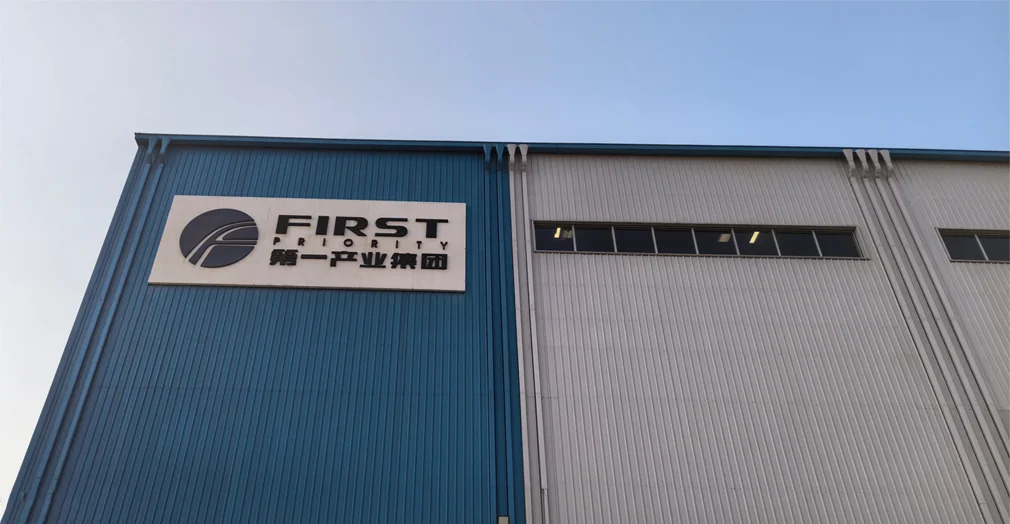
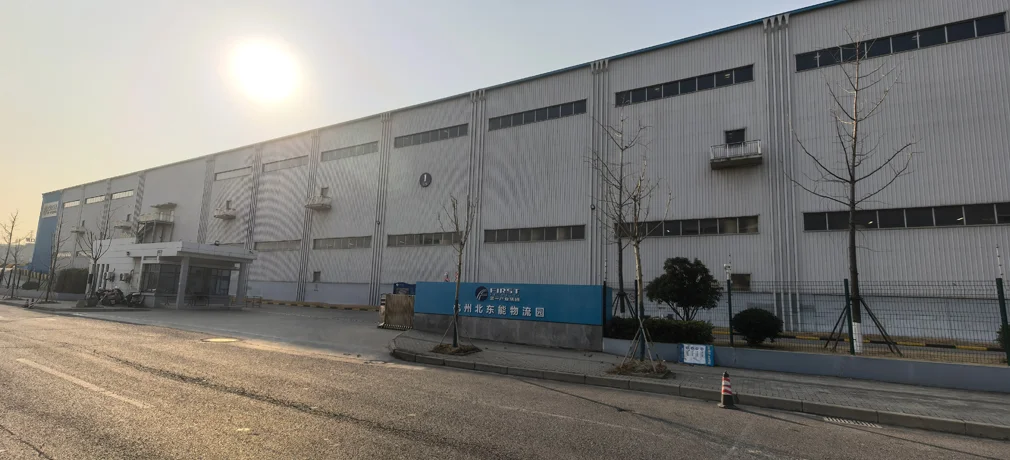
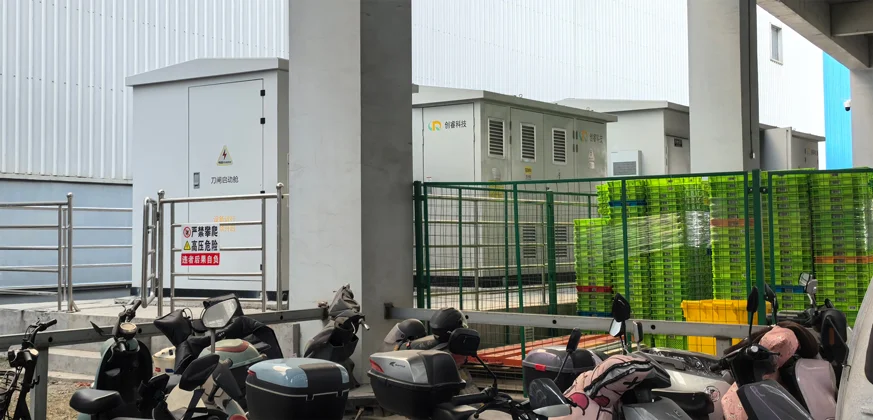
Location: Dongneng Logistics & Jinxi Industrial Park (First Industry Group)
Challenge: Voltage fluctuations, reactive power impact on PCC, harmonic distortion during surplus PV power export
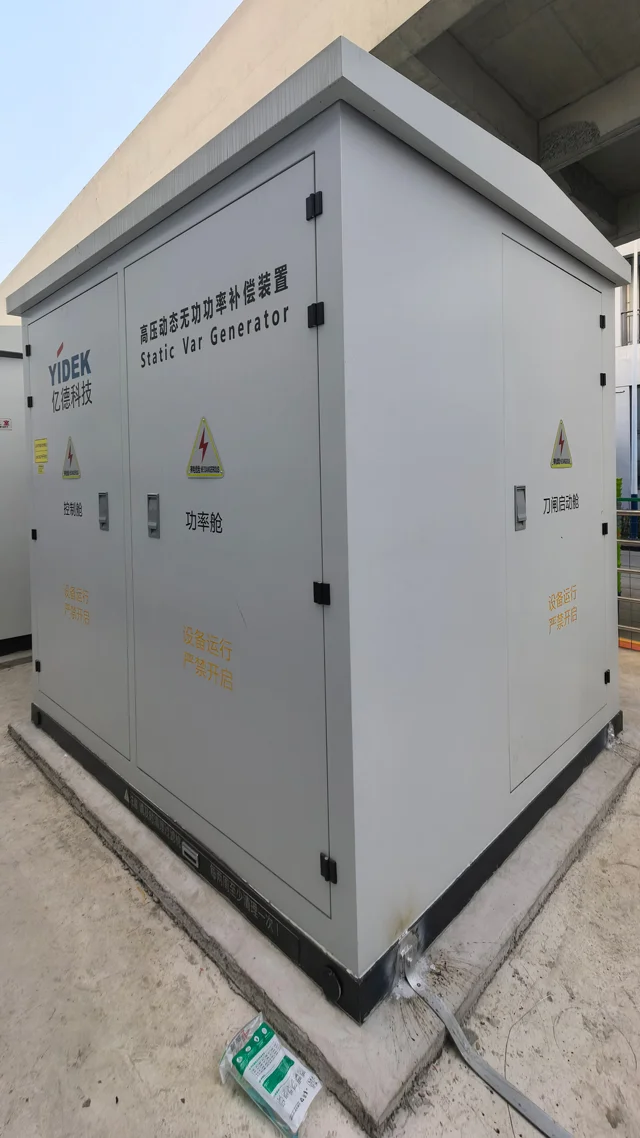
Solution: YDK-SVGH Series High-Voltage Dynamic Reactive Power Compensation Device (STATCOM)
Key Results: Improved voltage stability; sustained high power factor; reduced reactive power losses; enhanced PV utilization efficiency
This case study examines how two industrial parks within First Industry Group addressed voltage stability and power quality challenges arising from distributed photovoltaic (PV) grid integration through a high-voltage static var generator (SVG/STATCOM) solution.
Project Background: The Challenge
Distributed photovoltaic systems have seen widespread adoption across Chinese industrial parks in recent years. However, as these systems operate and surplus power is exported to the public grid, new challenges emerge at the point of common coupling (PCC)—including voltage fluctuations, increased reactive power demand, and harmonic distortion.
Dongneng Logistics and Jinxi Industrial Park, both subsidiaries of First Industry Group, faced exactly these challenges as they expanded their PV generation capacity.
The operational challenges included:
| Challenge | Impact on Operations |
|---|---|
| Voltage fluctuations | Caused by intermittent PV output (cloud cover, time-of-day variations), affecting sensitive loads in the parks |
| Reactive power imbalance | Surplus PV export altered the reactive power profile at PCC, pushing power factor outside acceptable ranges |
| Harmonic distortion | PV inverters injected harmonics into the grid, potentially affecting other equipment and power quality |
According to the national standard GB/T 19964-2024, photovoltaic power stations are required to maintain a power factor continuously adjustable within the range of 0.95 leading to 0.95 lagging during grid-connected operation. As the scale of PV generation continued to expand, the parks urgently required equipment capable of dynamically regulating reactive power and stabilizing grid-connection voltage at the PCC.
Industry context: According to research cited by the U.S. Department of Energy’s Office of Scientific and Technical Information (OSTI), the benefits of adding shunt capacitors to a power system have long been recognized—improved voltage profile, lower system losses, and better system power factor. For PV grid integration, dynamic reactive power compensation extends these benefits to variable renewable generation, addressing the inherent intermittency of solar power.
Industry reports indicate that the global static var generator market continues to expand, driven primarily by renewable energy grid integration and industrial grid stability requirements—a trend directly reflected in this project.
Solution: YDK-SVGH Series High-Voltage Dynamic Reactive Power Compensation Device
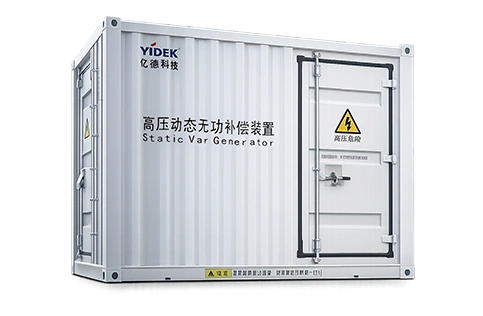
To address the voltage fluctuation, low power factor, and harmonic distortion issues caused by surplus PV power export, Yide Technology supplied the YDK-SVGH Series High-Voltage Dynamic Reactive Power Compensation Device.
What the solution does:
The YDK-SVGH is a high-voltage static var generator (SVG/STATCOM) that rapidly and continuously supplies both capacitive and inductive reactive power—enabling precise voltage and reactive power control to ensure stable, efficient, and high-quality power system operation.
How it works in this project:
| Function | Application in the Parks |
|---|---|
| Real-time monitoring | Continuously measures power quality data at the PCC |
| Dynamic reactive power adjustment | Rapidly injects or absorbs reactive power based on grid conditions |
| Continuous power factor regulation | Achieves smooth, step-less power factor correction |
| Voltage stabilization | Suppresses voltage fluctuations and flicker caused by variable PV output |
| Harmonic compensation | Reduces harmonic distortion injected by PV inverters |
Why this solution was selected:
The YDK-SVGH series was chosen for this project based on several key characteristics:
-
Modular design adapted to the 10kV grid-connection environment of the industrial parks
-
Remote monitoring and intelligent O&M capabilities, reducing on-site maintenance requirements
-
Fast response time critical for managing rapid fluctuations in PV output (e.g., sudden cloud cover)
-
Harmonic compensation functionality addressing both reactive power and power quality concerns simultaneously
For a detailed technical overview of the product series, you can review the high-voltage static var generator (STATCOM) series.
Project Outcomes
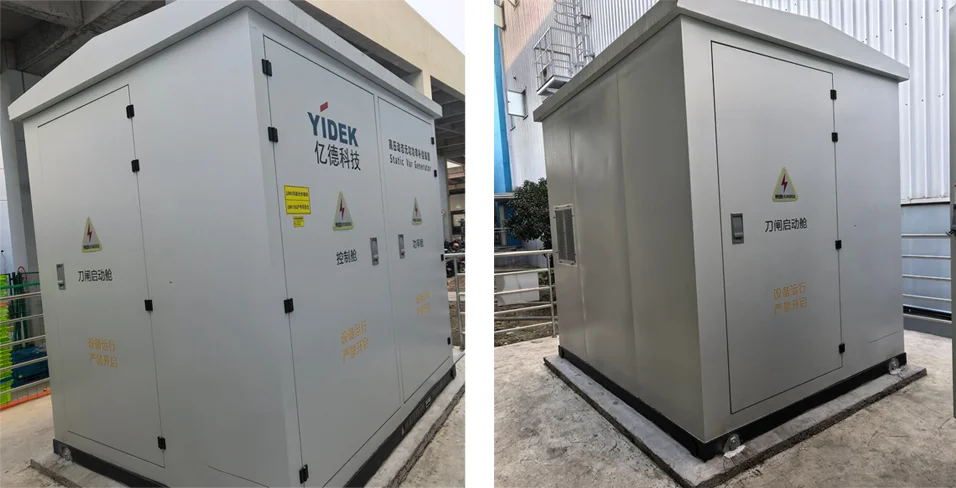
Following the commissioning of the YDK-SVGH system, the parks reported measurable improvements across multiple operational dimensions:
| Outcome | Description |
|---|---|
| Voltage stability | Significantly improved during surplus PV power export periods |
| Power factor | Consistently maintained at a high level, meeting GB/T 19964-2024 requirements |
| Reactive power losses | Effectively reduced through dynamic compensation |
| PV utilization efficiency | Enhanced through improved grid-connection compatibility |
| Grid power quality | Optimized; harmonic impacts on sensitive loads reduced |
| Customer satisfaction | Positive feedback received from First Industry Group |
Beyond the immediate improvements:
-
The high-voltage SVG provides a solid power quality foundation for long-term stable grid connection of the parks’ PV systems
-
The project lays a foundation for sustainable operation of First Industry Group’s green energy initiatives
-
The solution supports efficient consumption of green energy across the parks
Benefiting from excellent dynamic performance and high reliability, Zhejiang Yide Technology’s high-voltage SVG solution has provided strong technical support for the enterprise to continuously and efficiently utilize green energy.
Understanding the role of dynamic reactive power compensation in PV grid integration is critical for any industrial park operator considering similar deployments. To explore how these principles apply to your facility, you can refer to our voltage stability and regulation solutions page.
Key Takeaways for Industrial Park PV Operators
For facility managers and park operators evaluating power quality solutions for grid-connected PV systems, several lessons emerge from this case:
1. PV Grid Integration Requires Dynamic Compensation
Fixed capacitor banks cannot adapt to the variable output of PV systems. The intermittency of solar generation requires equipment capable of responding in real time to changing grid conditions—precisely what SVG/STATCOM systems provide.
2. Power Factor Compliance Is a Regulatory Requirement
GB/T 19964-2024 mandates power factor control within ±0.95 for grid-connected PV stations. Without proper compensation equipment, parks risk non-compliance penalties and potential grid disconnection.
3. Voltage Stability Affects Both Grid and On-Site Operations
Voltage fluctuations don’t just impact the public grid—they can disrupt sensitive on-site loads, affecting logistics operations, manufacturing processes, and equipment reliability.
4. Modular Design Supports Scalability
The modular design of the YDK-SVGH allows for capacity expansion as PV generation scales up, protecting the investment and enabling future growth.
5. Remote Monitoring Reduces Operational Burden
Intelligent O&M capabilities mean that park operators can monitor power quality remotely, reducing the need for on-site technical personnel and enabling proactive maintenance.
For facilities with both reactive power compensation and harmonic mitigation needs, understanding the capabilities of active harmonic filters and static var generators can help inform whether a combined solution is appropriate.
Next Steps: From Case Study to Decision
This case demonstrates that high-voltage SVG/STATCOM systems can effectively address the power quality challenges associated with industrial-scale PV grid integration. The key success factors are: proper system sizing based on PV capacity, real-time dynamic response capability, and harmonic compensation functionality to address inverter-induced distortions.
If you are evaluating similar improvements for your industrial park or PV installation, the next logical step is to understand the specific product specifications and how they compare. You can review the high-voltage capacitor banks and SVG/STATCOM systems page for more detailed technical information, or explore our voltage stability regulation solutions for application-specific guidance.