 Home
Home


For further details, please contact us.
Contact Us
A 3P3W (three-phase, three-wire) configuration has no neutral conductor, so the SVG measures and compensates only the current on the three-phase conductors — this is the standard configuration for systems supplying balanced three-phase loads, such as motors, that have no phase-to-neutral connection.
A 3P4W (three-phase, four-wire) configuration adds the neutral conductor into the measurement and wiring scheme, which matters wherever the busbar also carries single-phase, phase-to-neutral loads such as lighting circuits or single-phase equipment sharing the same panel as three-phase loads.
Those single-phase loads can create current imbalance that flows back through the neutral conductor rather than through the three phases evenly, and a 3P4W-configured device is built to sense and account for that neutral-line current as part of its compensation, rather than only looking at the three-phase currents in isolation.
How YIDEK's V8 Supports Both Configurations
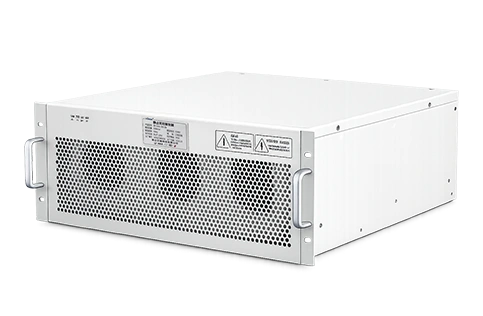
YIDEK's V8 series SVG and APF modules use a 3-level topology available in both 3P3W and 3P4W configurations on the same underlying hardware platform, at the standard 380V(±20%) input and 50Hz/60Hz(±10%) working frequency.
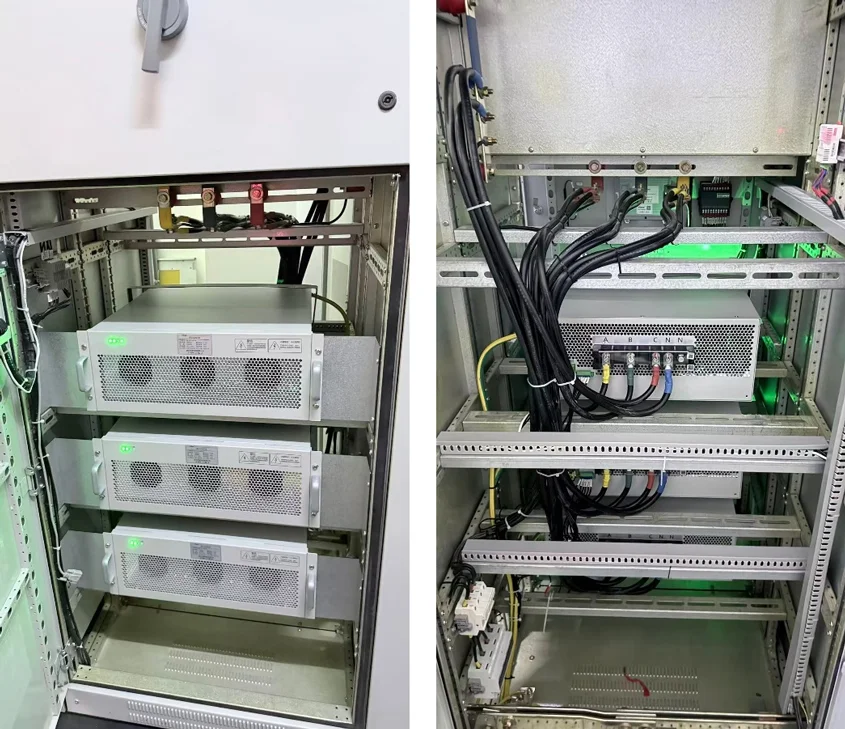
The CT sampling terminals for the current transformer inputs are labeled A+/A-, B+/B-, and C+/C- for the three phases, and the manual specifically notes that for 3P3W systems, the neutral line and the Phase B CT input should be disconnected — which by implication means that in 3P4W mode, both the neutral line and the Phase B CT connection remain active, since the device needs that additional signal path to measure and compensate current involving the neutral.
This shared-platform approach means the choice between 3P3W and 3P4W is a wiring and configuration decision made at commissioning, rather than a decision that requires a different module hardware series or a different capacity range — the same 50, 75, 100, and 150kvar module ratings apply regardless of which wiring configuration is selected. For more details on the V8 series platform, you can explore our SVG and APF product page.
When Your System Needs 3P4W
The deciding factor is what is physically connected to the busbar at the SVG's point of connection.
If that busbar exclusively feeds balanced three-phase loads such as motors, with no phase-to-neutral single-phase equipment sharing the connection, a 3P3W configuration is the simpler standard choice, since there is no neutral current to measure or correct.
If the busbar also carries single-phase loads — lighting panels, single-phase machinery, or general building loads mixed in with three-phase equipment — a 3P4W configuration should be specified so the neutral current is properly accounted for in the compensation.
Where it is unclear whether meaningful neutral current is present, a site measurement of neutral conductor current at the panel is the most reliable way to confirm which wiring configuration your installation actually requires before finalizing the SVG specification. To understand how SVG fits into broader compensation strategies, visit our voltage stability and regulation solution page.
Contact our engineers to confirm whether your panel requires a 3P3W or 3P4W SVG configuration.
Related Reading
-
APF vs SVG: what’s the difference, and which does your factory need?
-
What is a smart capacitor module, and how is it different from a traditional capacitor bank?
-
Power Factor Correction Solutions for Your Facility